
Why do some packages become litter while others don’t?
For decades, litter policy has focused on people.
Why do people litter? How can we change behaviour? And how can we improve recycling?
But one important question is almost never asked:
How does the design of the packaging influence the chance that a package becomes litter?
We have now started to study the relationship between packaging design and littering.
Our goal
Make ‘litter risk’ a design parameter.
Just like recyclability, carbon footprint and material use are design parameters today.
Most littered packaging was never used at home. Research by litter researcher Dirk Groot (Zwerfinator) shows that approximately 90% of littered packaging is designed for, or suitable for, on-the-go consumption.
Think of: snack wrappers, drink containers, candy packaging, fast food packaging, beverage cups
These products are consumed in public spaces. That makes them fundamentally different from packaging used at home. Yet packaging policy largely treats them the same.
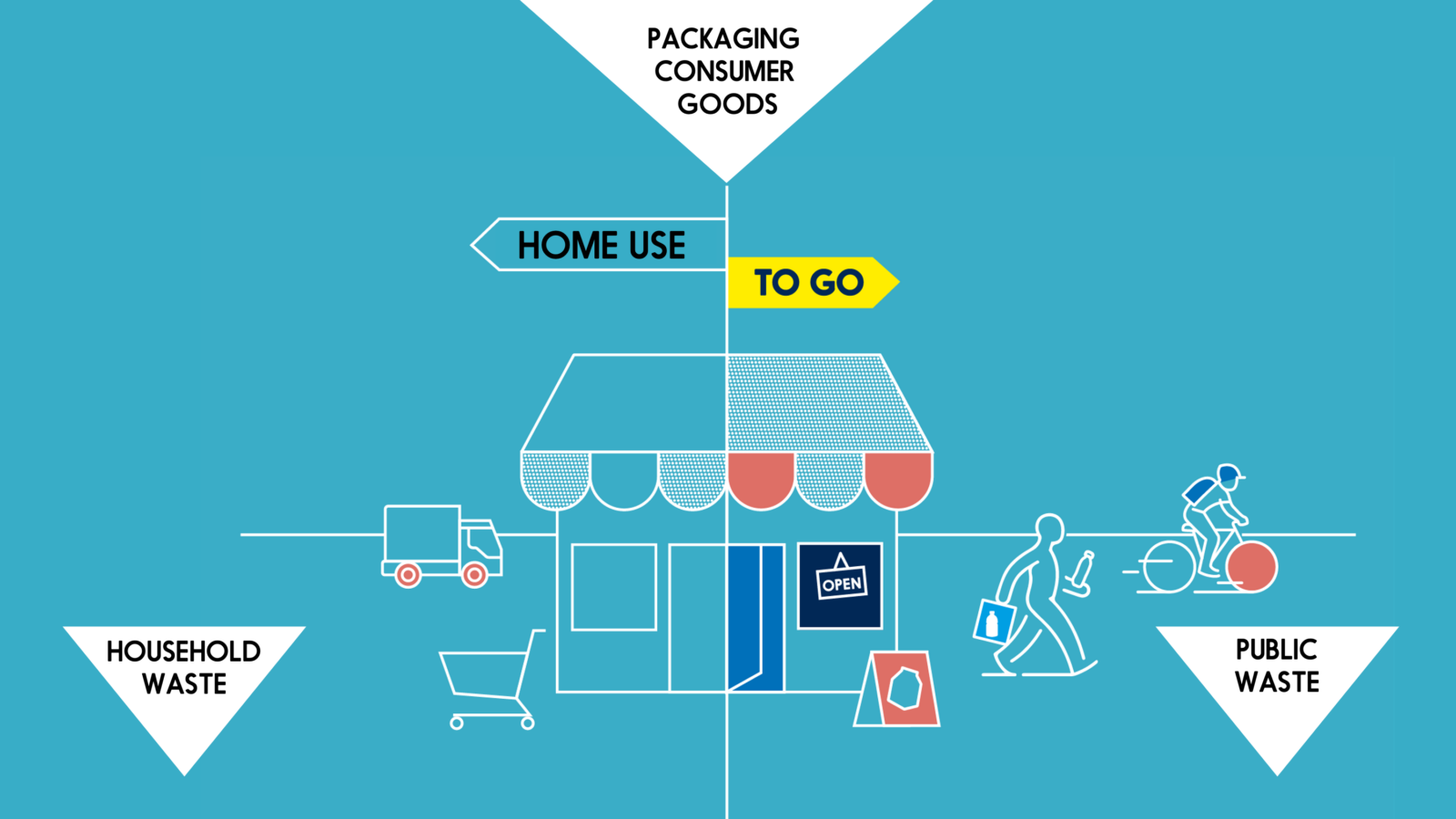
Litter doesn’t come from home but from to-go street consumption
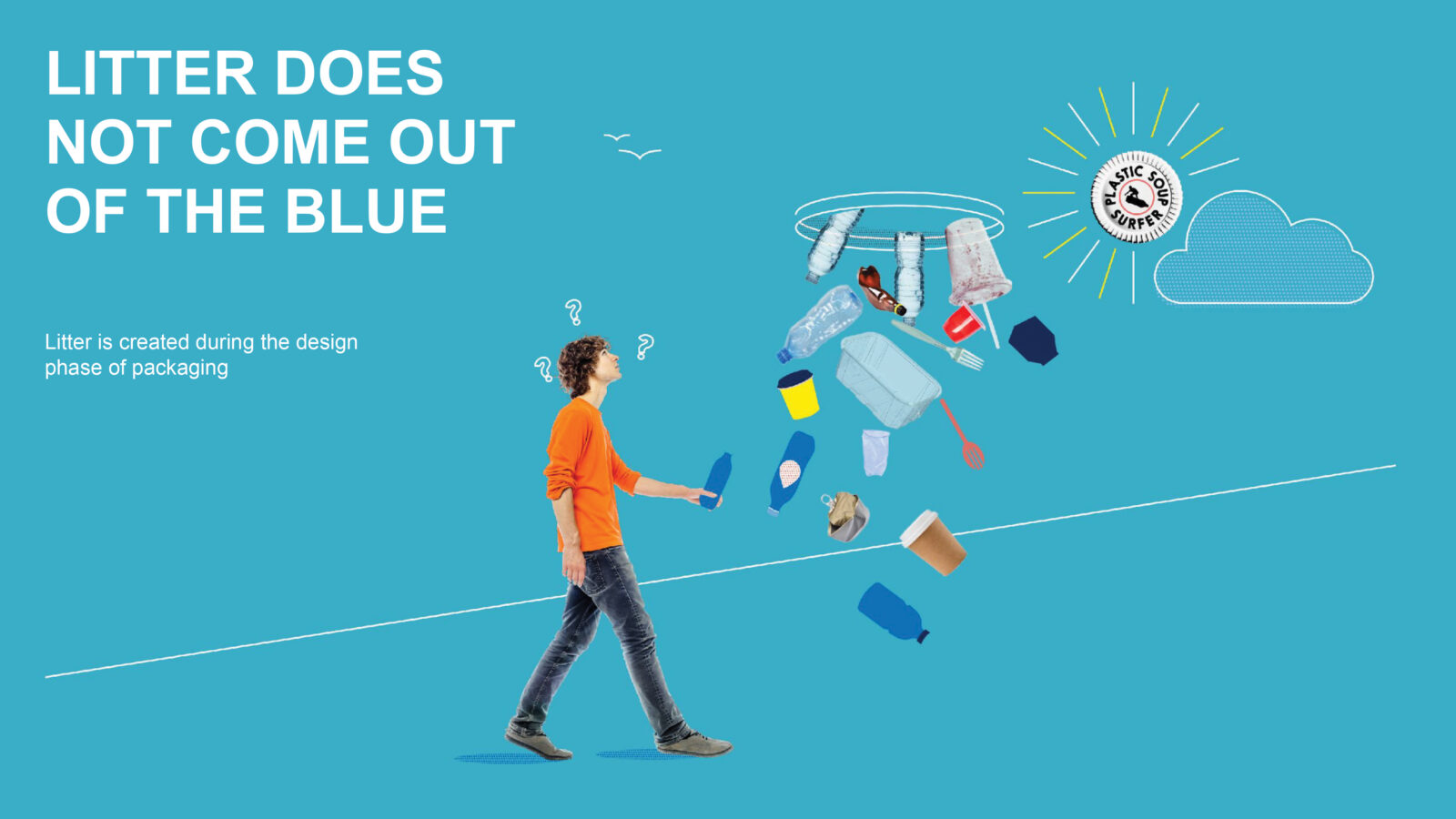
Litter doesn’t fall from the sky. litter is ‘created’ during the design proces
Litter is not random. Every littered package is the result of an interaction between: the consumer, the product, the packaging and the environment.
Nearly all litter research focuses on people and behaviour. We focus on the package.
Because packaging design influences what we call: Disposal Urgency
How quickly does a consumer want to get rid of a package after use?
The higher the disposal urgency, the higher the litter risk.
Designers cannot control behavior. But they can influence it. Every design choice affects what happens after consumption. If their packaging actually reaches the bin.
Questions designers rarely ask today: Does the package leak after it is emptied? Does it become sticky or does it smell after use? Is it bulky, or does it contain loose parts? Or how difficult is it to carry after use? Yet these factors may strongly influence littering behavior.
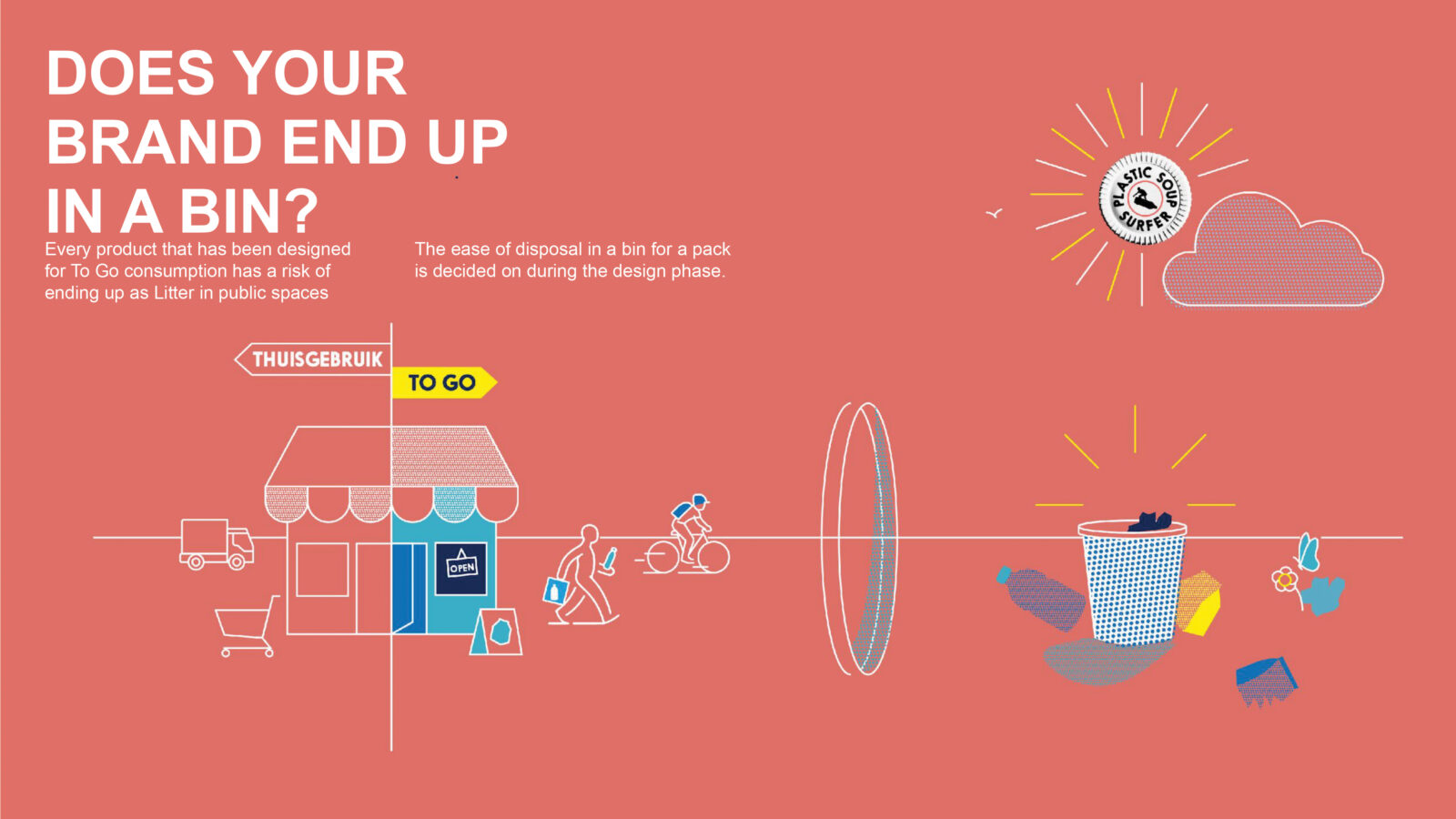
Designers influence post consumption litter risk of the packaging
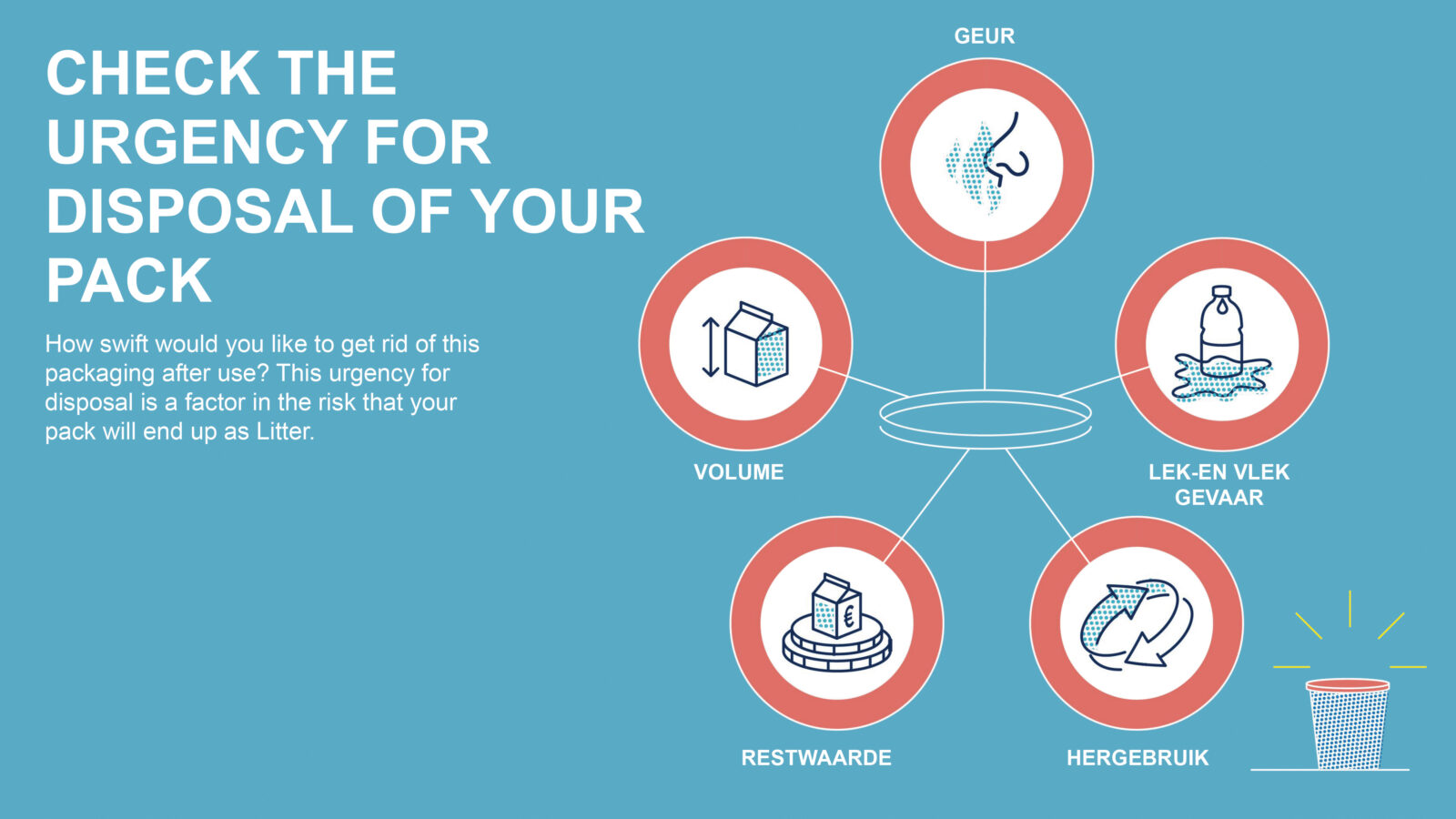
What determines disposal urgency?
OUR HYPOTHESIS
The more inconvenient a package becomes after consumption, the higher the disposal urgency and thus the litter risk.
We believe several packaging characteristics influence the chance of littering.
Physical
characteristics:
Volume, Weight, Foldability, Ability to reseal
Post-consumption characteristics:
Leakage, Stickiness, Smell, Remaining product residues
Structural
characteristics:
Loose parts, Small detachable items, Multi-component packaging
Environmental
interaction:
Wind sensitivity, Persistence in the environment
Policy
characteristics:
Part of a deposit scheme or not
WHY CURRENT POLICY IS INCOMPLETE
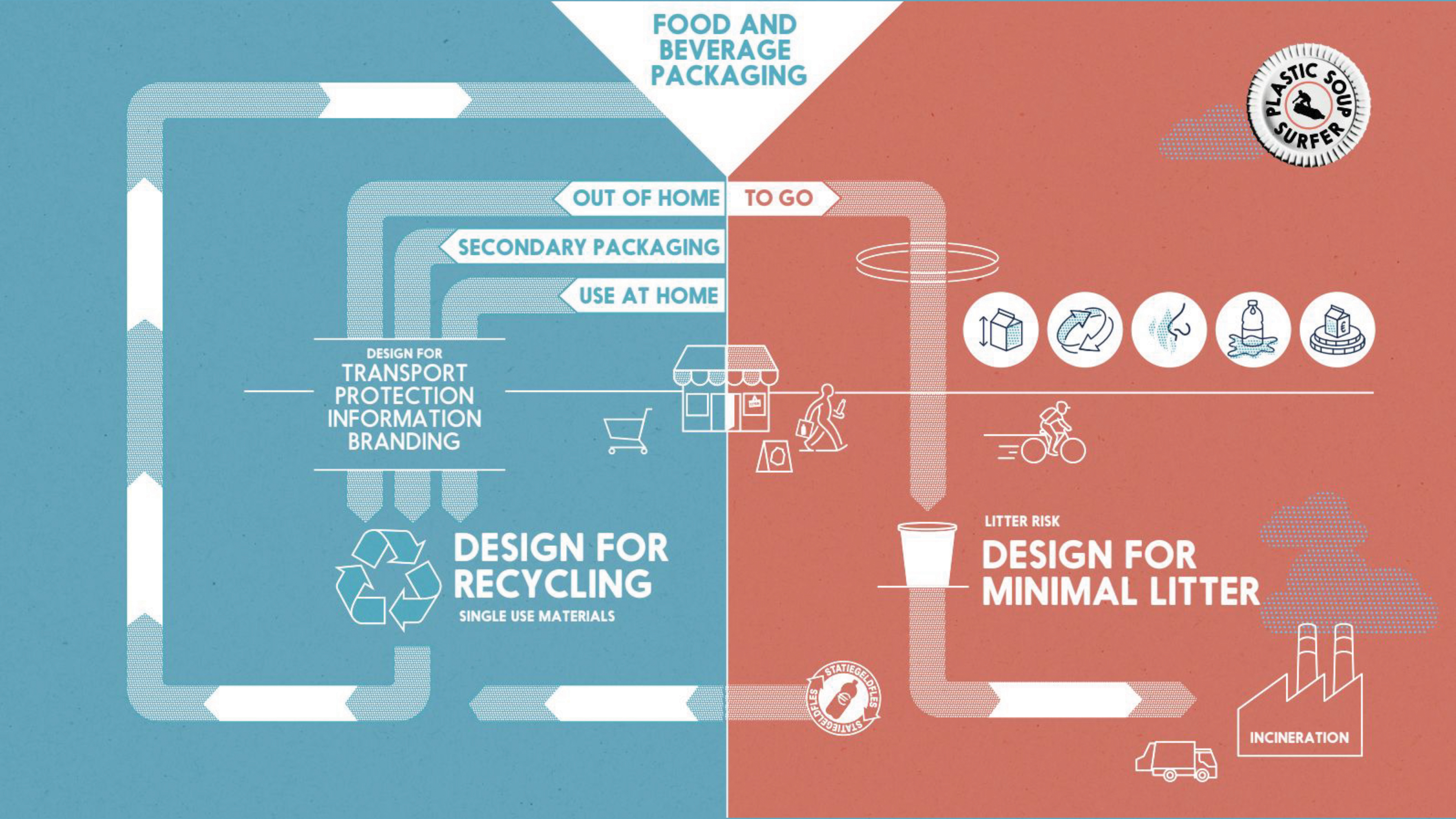
Designing for recycling is not enough. Current packaging policy primarily rewards recyclability. This makes sense for household packaging. But for many to-go products, the reality is different.
Most packaging consumed in public spaces ends up in public bins (and is incinerated with the residual waste) or as litter.
So not in recycling systems. For these to-go marketed products, design for recycling alone is insufficient. We need to design for litter prevention.
OUR VISION
Unlocking creativity instead of writing more rules
We do not believe every design solution should come from government. The role of policy should be different. Create incentives, measure litter risk and reward better designs.
Once litter risk becomes visible and measurable, designers and producers will do what they do best: innovate.
THE BOTTLE CAP EXAMPLE
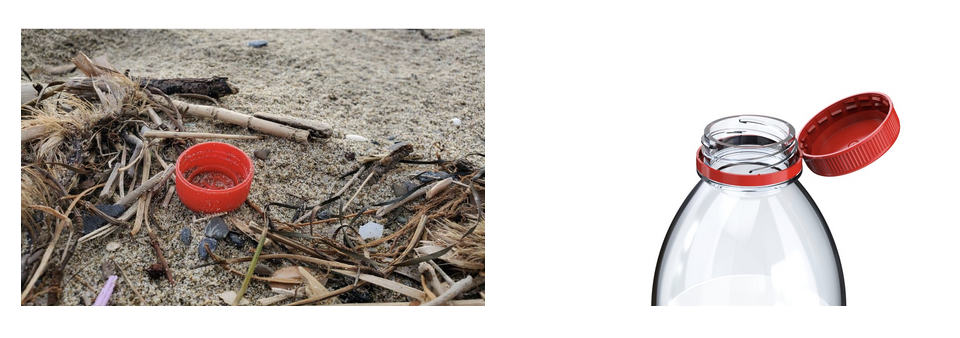
The attached bottle cap introduced under EU legislation is a good example. The solution is simple. The technology is simple. The idea could have been implemented years ago. But without incentives, nobody acted.
The attached bottle cap shows what is possible when the right incentives would exist. Imagine what could happen if the same attention were given to leakage, loose components, portability and disposal urgency.
OUR RESEARCH
Building the science of litter risk
Litter Risk is being developed together with researchers, designers and policymakers.
Current research projects:

TU Delft
Graduation research by Wouter van Dam
Supervised by:
– Dr. Ellis van den Hende
– Hilde Beugelink
– Merijn Tinga
This qualitative research investigates which packaging characteristics increase or decrease litter risk.
Policy and industry engagement
Discussions are ongoing with:
– Ministry of Infrastructure and Water Management
– Verpact
– packaging industry partners
In addition, litter measurements have been conducted during promotional sampling campaigns together with well-known sweets brand wrappers as well as well-known soda cans.

Leiden University
Within the Honors Program, three master’s students are investigating how to introduce the concept of litter risk to policymakers, producers, and other stakeholders.
THE LITTER RISK INDEX
Making litter risk measurable
Our ambition is to develop a practical Litter Risk Index.
An instrument that helps designers, producers, researchers and policymakers evaluate packaging before it enters the market.
Our ultimate goal:
Packaging should be assessed not only on recyclability, but also on its risk of ending up in the environment. Only then can we design packaging that is truly sustainable.